

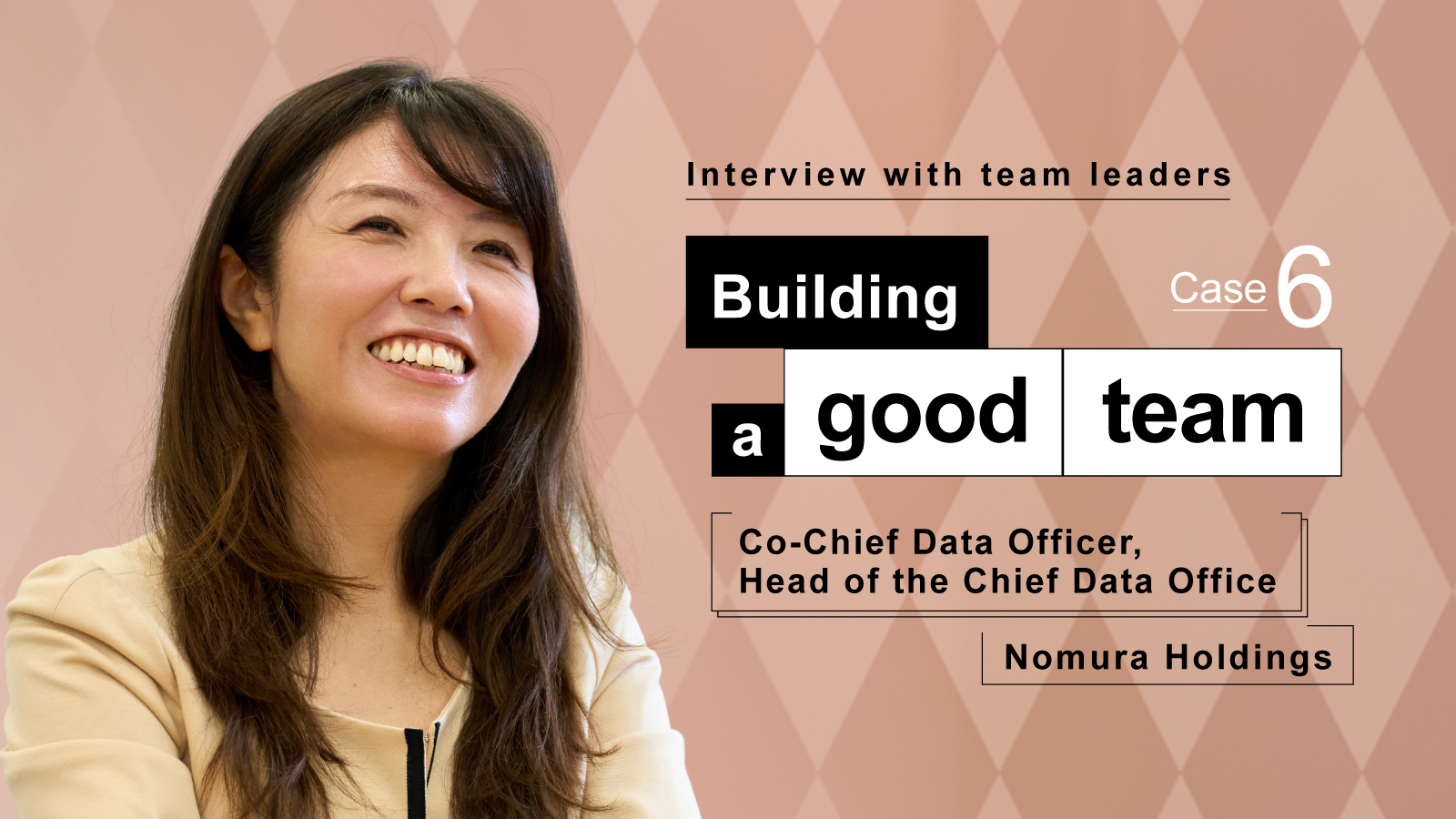
The sixth installment of our interview series with Nomura leaders features Ayumi Kato, Co-Chief Data Officer at Nomura Holdings.
Nomura’s Chief Data Office is responsible for building an environment where rapidly evolving AI can be proactively and safely deployed across our businesses. How does this cutting-edge team generate new ideas and achieve its goals? Kato says the key to building a good team is ensuring that no one feels like an outsider.
Q. Could you briefly explain what the Chief Data Office does?
Our mission is to create an environment that enables Nomura to use data and AI safely and effectively. We focus on two key questions. First, how can we leverage AI to deliver high-quality, differentiated services while ensuring the safety of the services we provide to our clients and employees? And second, how can we make the most of Nomura’s vast stores of data, which contain valuable know-how? Our core work is to build an environment where AI can be used appropriately and maintain the quality of the data that supports it.
Q. When did Nomura begin this kind of work?
We started managing data as an organization about 10 years ago, which I believe was quite early for a Japanese financial institution. Our predecessor, the Data Management Office, was established as the department responsible for data, and I was one of its first members. At the time, data management was primarily focused on regulatory compliance. Today, however, data is also used for AI, so maintaining the quality and structure of the data itself has become important in many ways.
When the office was first launched, the team had around 10 people. It has now grown into a global organization of nearly 100 people, with teams in New York, London, Singapore, India, and other locations. Over the past decade, our role has changed significantly.
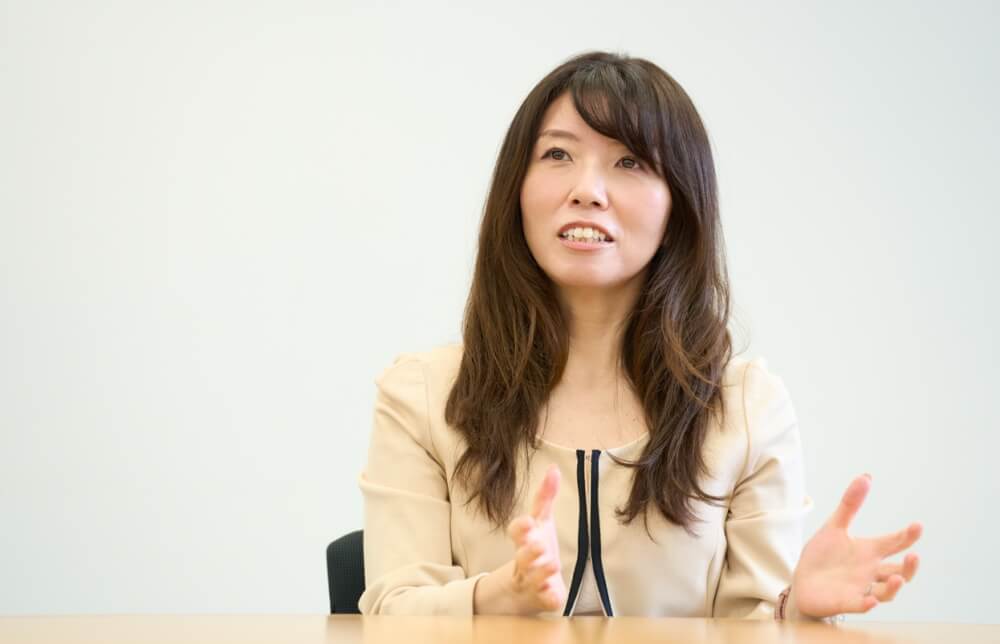
- 拡大
- Ayumi Kato, Co-Chief Data Officer, Head of the Chief Data Office, Nomura Holdings
Q. Did you already have expertise in this area?
Not at all. Before joining Nomura, I worked in Operations at Lehman Brothers. In simple terms, operations covers the entire post-trade process, making sure transactions with clients are completed through settlement. After joining Nomura, I used the experience and knowledge I had gained to create initiatives to help improve Nomura’s operations. Since then, whenever I thought something could be done differently, I proposed the idea and worked on bringing the new function to life.
Perhaps I enjoy creating an ideal vision from scratch and then figuring out what kind of people and organization are needed to make it happen. I got married in 2011, and just before going on maternity leave, I was working on reference data management. When I returned, I was invited to help launch a new office. I felt it was a foundational initiative that would help open a new chapter for Nomura. It is still very much a work in progress, but I have always loved working on data and AI, and I find it especially rewarding to immerse myself in that kind of work, as well as to building internal systems and structures.
Q. It must have been difficult to build something from scratch.
Yes, it was. What I have been doing is envisioning the ideal state. Then I look at the gap between that ideal and the current situation, and think about what kind of people and support are needed to make it happen. The skills needed also differ depending on the initiative, so I have adjusted staffing accordingly.
As AI continues to evolve, our safety and governance measures must evolve too. So our work keeps changing. We receive requests from across Nomura, such as wanting to use AI in a certain way. Our department reviews those requests from several angles—for example, whether the use is ethical and legally sound, and whether cybersecurity measures are sufficient—before approving and rolling them out.
To date, we have deployed more than 80 AI solutions in Japan and over 200 globally.
Q. Data preparation and AI sound like challenging work.
AI is probably the fastest-changing field right now, and there is a great deal to do. As we use AI more, we increasingly hear questions such as, “Is this data really safe to use?” With the rise of generative AI, we can now understand and summarize text in context and handle language much more flexibly. This gives us a real opportunity to make better use of the vast amount of proprietary data we hold.
At the same time, because we have historically stored and organized data in line with the operations of each business division and function, using it across departments requires us to rethink our current approach to data management and move toward a more advanced, strategic model. Data preparation is a painstaking, step-by-step effort, but given the speed at which AI is evolving, I believe the key to success is how quickly we can move this work forward.
Q. What is the makeup of your team like?
We see diversity as essential, so we have intentionally built the team with that in mind. We have a mix of nationalities, backgrounds, and genders. In Tokyo, more than half of the roughly 20 team members are non-Japanese. Some specialize in data science, some have a governance background, and others come from an IT background.
Because AI is still a relatively new field, solving its many challenges requires fresh thinking. It is important that everyone brings their own expertise, keeps an open mind, and thinks carefully about what should be done. We want people that can think freely and not be limited by the existing frameworks.
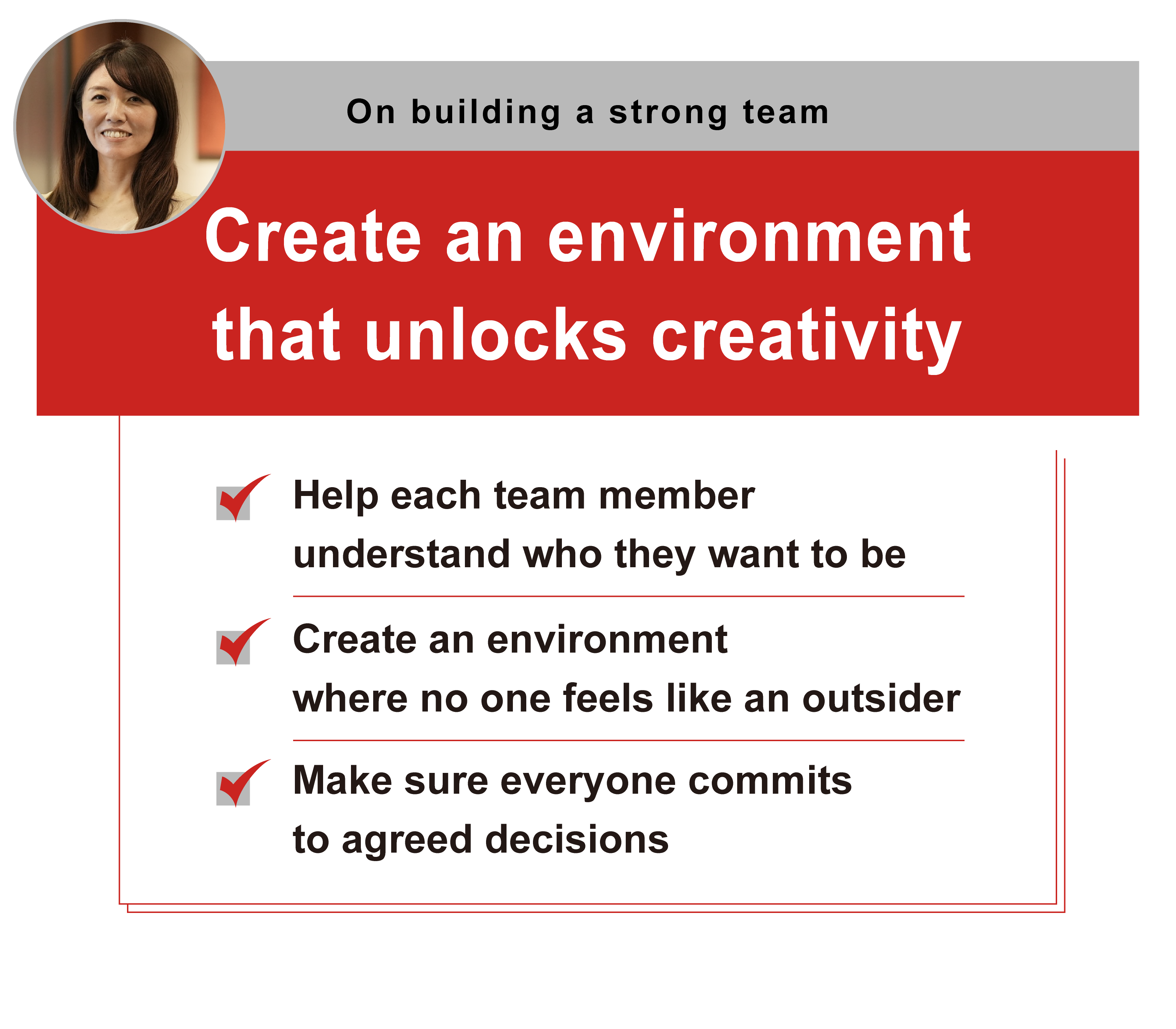
We believe diverse perspectives lead to new ideas, but it is just as important that everyone feels comfortable and included. I think that kind of environment is essential for innovation. We place tremendous value on psychological safety, where everyone can feel it is okay to be different.
Q. So, the goal is to build a team where people respect different views?
That’s right. In a uniform organization, it can be difficult for new ideas to emerge. If someone feels like they don’t quite fit in, they may hesitate to speak up and instead go along with the group to avoid tension. But that does not encourage free thinking.
Q. Is that view based on your own experience?
I think so. I was born and raised in Japan, but in my 20s, when I was working at Lehman Brothers, I spent a year in New York. I found it difficult to break through and connect with the people around me. Perhaps I was seen as a newcomer with little experience, but when I shared my opinions, they often did not get much response. Over time, I became more hesitant and found it harder to speak up.
But new ideas often begin with a small observation. Even if people think they may be wrong, I want them to keep speaking up. That is why I want to build a team where everyone belongs and no one feels like an outsider.
Q. How do you put that into practice in day-to-day communication?
For starters, we all get together once a week. I share my thoughts and I encourage the team to share theirs as well. This gives us a chance to better understand ourselves and one another. It also helps make it easier for people to speak up.
In the past, as part of team-building, we also had members answer a set of questions and used the results to identify personality types. The results gave everyone useful insight into themselves and their teammates, and people seemed to really enjoy it. I believe a team becomes stronger when each person understands their own strengths and moves closer to the kind of person they want to be. My ideal team is one in which all 100 members have a clear sense not only of their professional goals, but also of the kind of person they want to become.
Q. As the leader, don’t you sometimes need to be firm?
In terms of working style, I give people a lot of freedom. But I do expect them to be fully committed to results. I do not interfere with the details of how they work, but I do pay attention to the outcome.
For example, at the start of a project, during the brainstorming stage, I want people to think freely. But once the team has agreed on a direction, I do not keep debating it afterward. We generally do not allow someone to later say they were actually against the decision. The way people think and work is flexible, but our internal governance is strict. Once a decision is made, it is final.
Q. So, is freedom mainly a means to achieve results?
I believe a free environment is essential for producing results. Free thinking is the foundation of innovation. We need to move faster without being bound by old ways of thinking. I tell team members that they should have the courage to design the best process from scratch.
That is why we always start by sharing the goal clearly. The path to get there can be decided freely. The goal itself should not change, and there are many ways to get there.
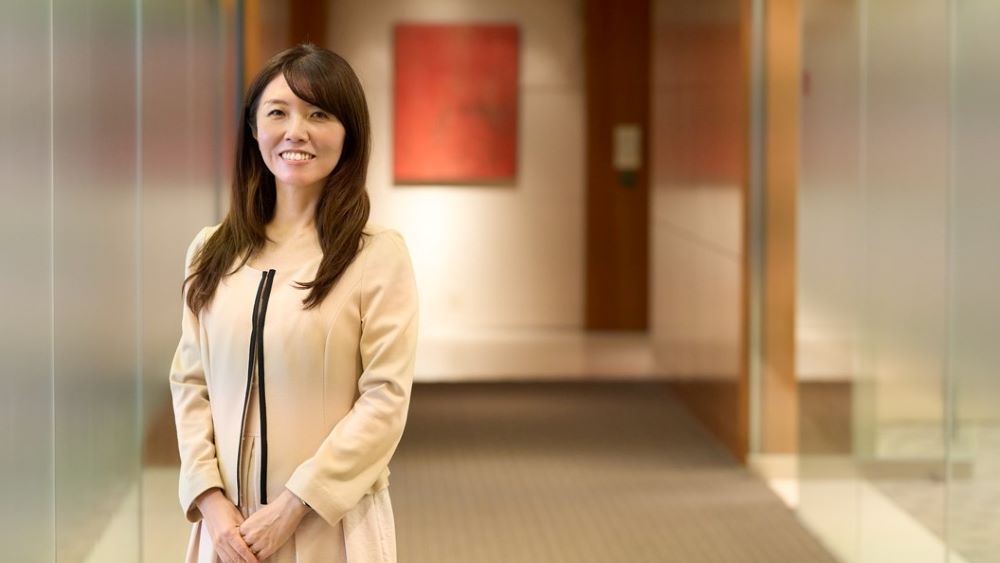
Ayumi Kato
Co-Chief Data Officer, Head of the Chief Data Office, Nomura Holdings
Ayumi joined Nomura Holdings in 2008. After working in Operations, she helped launch the Data Management Office (now Chief Data Office) in 2014. As a pioneer in the industry, she has led Nomura’s data strategy, including the development of the company’s first data governance framework. She became department head in 2020. Since 2023, in addition to governance, she has been driving company-wide data utilization as one of the leaders of the Data Center of Excellence. From 2024, she also has been leading the establishment of the AI governance framework. She assumed her current role in 2025.
Before Nomura, she held key positions in the Operations Department at Lehman Brothers. She is a working mother raising two children.