

Track Record shines a spotlight on the diverse people who work at Nomura and the work they do. In this second installment, we meet Leni Kimura of the Compliance Administration Department, who joined Nomura Securities as a mid-career hire in June 2025.
After working at a non-Japanese financial institution, an IT venture company, and a securities firm affiliated with a major Japanese bank, Kimura is now focused on enhancing compliance surveillance through the use of AI and other technologies. We spoke with her about what she learned after stepping away from finance and how her priorities have shaped her career choices through different stages of life.
-
How did you begin your career?
I’m now in my 20th year as a working professional. Before joining Nomura, I worked in several different organizations, starting at a non-Japanese financial institution, then moving to an IT company and a securities firm affiliated with a major Japanese bank. I also spent about three months traveling overseas.
-
Did you take a break from work for those three months?
Yes. I joined UBS Securities straight out of university. I had lived overseas during middle and high school, and I wanted to do work that could make a global impact. I also wanted to gain experience and skills that would be valuable anywhere in the world. I felt a foreign company might offer a more equitable workplace for both men and women, and that the name would be recognized overseas. I thought it would look good on my résumé, too. I also believed that having knowledge of economics and finance would be a valuable skill in a global career, so I chose UBS Securities.
In my first year, I worked in bond underwriting. From my second year, I joined the Investment Banking Division, where I covered the real estate sector and worked mainly on J-REIT IPOs and public offerings. Later, I moved to a corporate planning department, where I supported senior management and helped coordinate projects across the entire Japan business.
Things were incredibly busy back then. It felt like I was constantly running. That was what I wanted at the time, but around my tenth year, I began to wonder whether finance was really the right fit for me. So I decided to take a step back and think things through with an open mind. I left without deciding what I would do next.
- 拡大
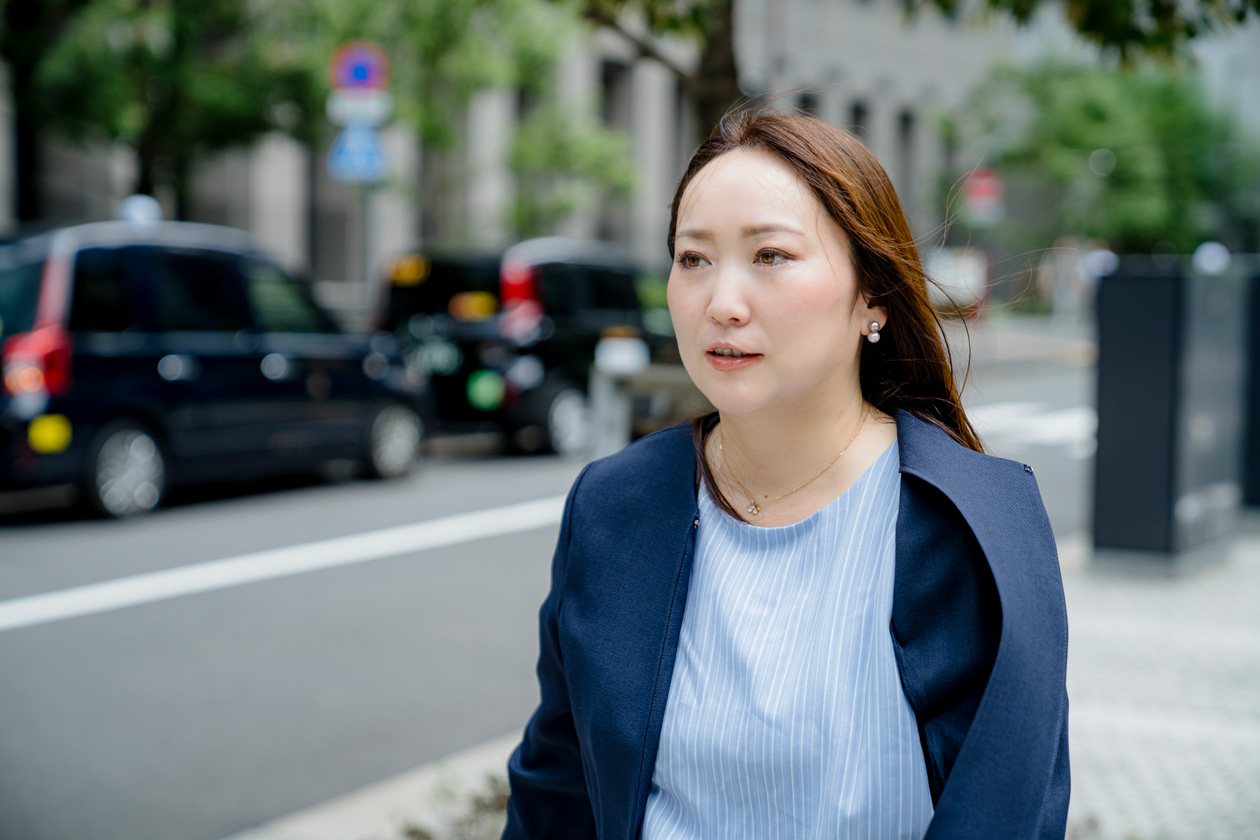
- Leni Kimura, Compliance Administration Dept., Nomura Securities
-
Is that when you started traveling?
Yes. After leaving the company, I traveled overseas and enjoyed having the freedom to do what I wanted. But after about three months, I got tired of figuring out what to do every day. I realized I might do better with a little more structure and something to keep me engaged. That was when I first realized that I really do love working.
-
You then moved to an IT company, right?
Yes. Since I’d left finance, I wanted to try something different. Through an acquaintance, I heard that an IT venture company looking to expand its overseas business was hiring, and I thought it sounded interesting.
When I started working there, I was surprised by how different the atmosphere and culture were from finance. In the securities industry, there are many regulations and rules, so it becomes second nature to carefully consider risks and pay attention to every detail. By contrast, the internet industry at the time had a very different pace of decision-making and a different approach to risk.
That experience made me realize how much finance had shaped me. When I left UBS Securities, I thought finance wasn’t for me. But once I was on the outside, I found myself thinking about the important role the securities industry plays in supporting the financial infrastructure of society. That was when I realized that finance had become a part of who I was and the way I thought. -
Did you return to the financial industry after that?
Yes. I worked at Mitsubishi UFJ Morgan Stanley Securities before returning to UBS Securities. I heard there was an opening in the same role I’d held before. Once I was back, it felt right again, and I made up my mind to build my career in finance.
-
What has mattered most to you when choosing a job?
I’ve always looked for opportunities to keep learning. As you get older, there can be times when you learn less, so I don’t want to stay in the same place. I want to continue challenging myself, building on my skills and knowledge, and growing every day.

-
What has been one of the biggest challenges in your career?
One that comes to mind was a deal I worked on in my first year. The team was still taking shape, and the person who had been handling the project had moved to another department. With no one else to take it on, I had to manage the project despite having very little hands-on experience. I wasn’t sure what to do, so I sought advice from the previous person in charge and others who knew the work well. Even as a first-year employee, I had to face clients. I couldn’t just tell them I didn’t know what I was doing, so I gave it everything I had.
In the end, the deal was closed successfully, and I later received an award for my work. I thought I had been struggling on my own, but people had been recognizing my efforts. Someone from the Investment Banking Division invited me to join the team, which led to my transfer in my second year. Throughout my career, I’ve found that if you put in the effort and do your work well, people will notice.
-
What prompted you to consider moving to Nomura?
After rejoining UBS Securities, I took maternity and childcare leave twice. When I returned to work, I moved into strategic planning for UBS's wealth management business. I found the work very interesting, but meetings with overseas colleagues often took place in the evenings, and the workload was heavy. Gradually, I found myself with less time and emotional energy to spare.
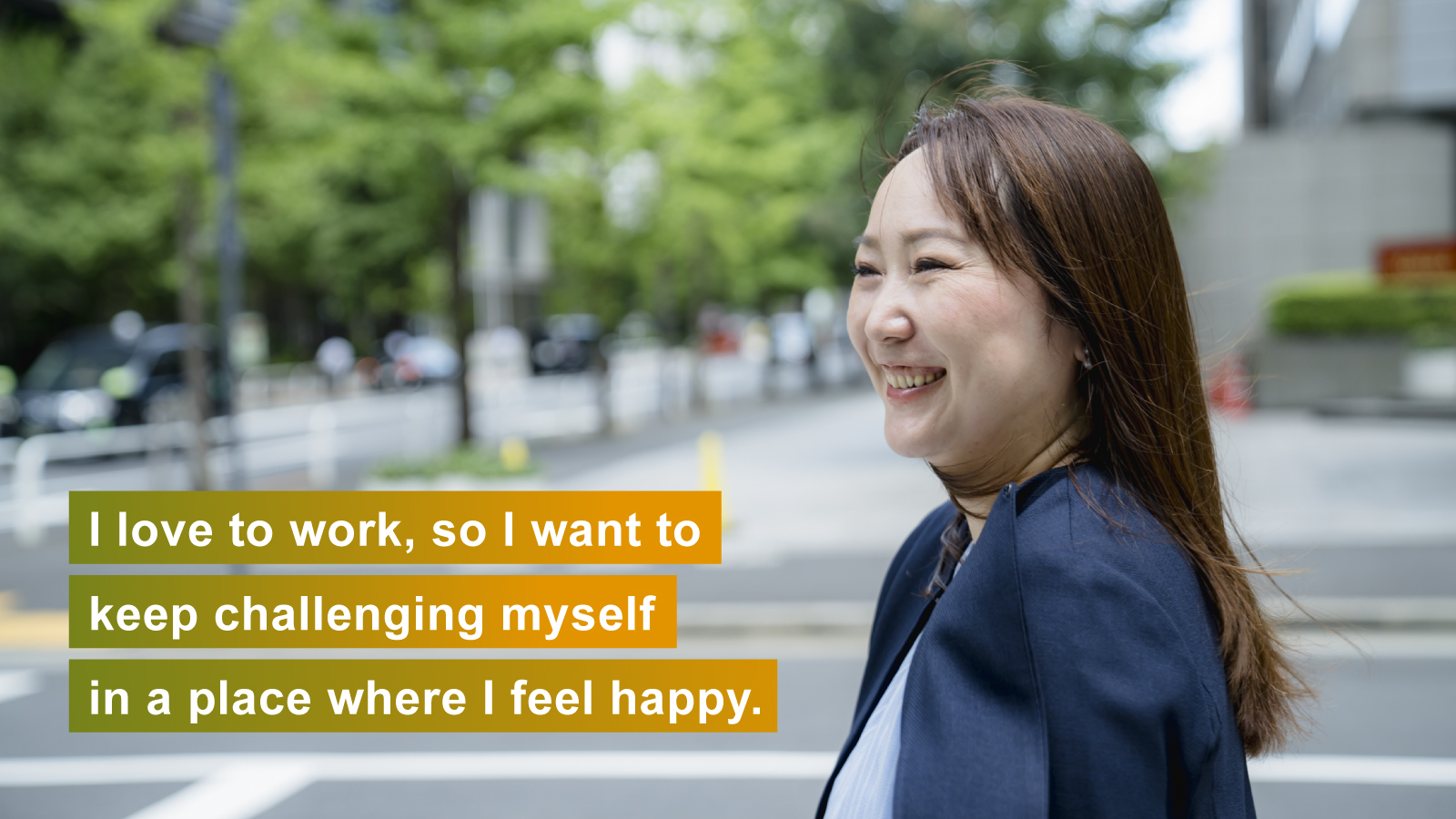
During the busiest period, I went a whole month without having dinner with my children. When I was under pressure at work, I was tense at home, too. I thought about it from many different angles, but in the end, I felt that what mattered most to my children was having a happy mother. Because I love my work, I realized I also needed to make balance a priority. I began looking for a workplace where I could keep smiling and continue taking on challenges.
-
Is that when you considered joining Nomura?
To be honest, my initial impression of Nomura was that it was a strict, top-down workplace where you had to tough it out, so I hadn’t considered it as an option. But my former colleague who currently works at Nomura told me that many employees had joined mid-career from foreign financial institutions, and that it was a good place to work. That changed my impression somewhat.
I didn’t have any experience in compliance, but I’d spent many years in planning roles and had a good understanding of the financial business. I thought I might be able to take on a new field by making use of my experience, so I applied. -
-
Has your impression of Nomura changed since you joined?
It has. People at Nomura come from a variety of backgrounds, including mid-career hires and people with overseas experience, and I’ve found the workplace more open than I expected. Some people are fully focused on their work, while others balance work with family life. The company is open to people with different career paths and ways of working.
I currently make use of reduced working hours and work from home. My manager and my team are very understanding, and I feel that the company wants employees to build long careers here. I’m truly grateful for that, and it makes me want to do my best in return.
-
What kind of work are you responsible for now?
I work on planning initiatives that support surveillance — in other words, monitoring. Surveillance teams review financial transactions involving institutional investors, retail clients, or our firm to check for potential issues such as improper trading. They also review whether communications are appropriate, including emails, chats, and calls between employees involved in this work and between employees and clients, such as institutional investors.
My role is to build the systems and processes that help the people carrying out this monitoring work more efficiently and effectively, by introducing and improving AI tools and other technologies. -
What do you find interesting about your current work?
I enjoy seeing how the systems we introduce make work on the front lines more efficient. We might use AI or other systems to do tasks that were previously done manually, or fine-tune the criteria used for generating alerts. When I see the workload decrease significantly, I feel that our efforts have been worthwhile.
Both compliance surveillance and the use of AI and technology are new areas for me. There’s a lot to learn, and I often find myself thinking, "So this is what goes on behind the scenes." It is a new challenge in every sense and a steep learning curve.
-
How are you making use of your past experience?
I’ve spent many years in planning roles, so I can draw on my experience analyzing issues and organizing key messages into presentations. The skills I’ve developed in coordinating with stakeholders, as well as my experience communicating with overseas offices at UBS Securities, also help in my current role.
When introducing systems that are shared globally, perspectives can differ between Japan and other regions. I feel that the experience I’ve accumulated over the years helps me navigate those differences. It’s also reassuring to be able to talk with my team and build new systems together. -
What are your hopes for your career in the future?
To be honest, I only started thinking seriously about my career recently. I enjoy my work, so I’d like to continue doing it. I’ve never worked overseas, so that is something I’d like to try someday. When my children are older, I may be able to shift up a gear and take on more challenging work.
I think that if I make decisions each day based on what matters most to me, the path I take will naturally become my career. For now, that feels like the right answer for me.
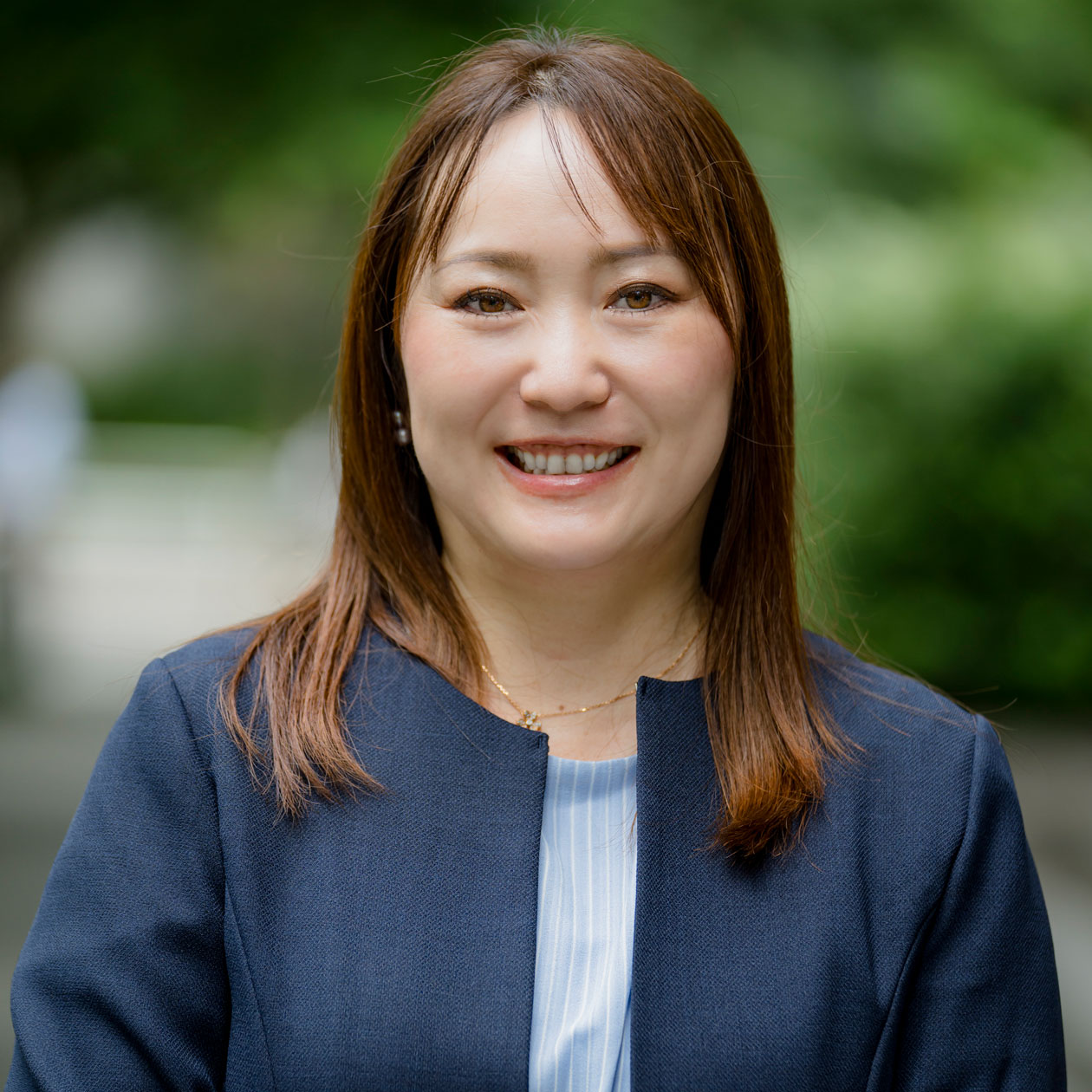

Leni Kimura
Compliance Administration Department
Nomura Securities
After graduating from university, Leni joined UBS Securities, where she worked in bond underwriting, investment banking, and corporate planning. She later worked at an IT venture company and Mitsubishi UFJ Morgan Stanley Securities before returning to UBS Securities. After taking maternity and childcare leave twice, she transferred within the group to UBS SuMi TRUST Wealth Management, working on strategic planning and joint venture operations. She joined Nomura Securities in June 2025. Her work focuses on using AI and other technologies to enhance transaction and communications surveillance and improve business processes.