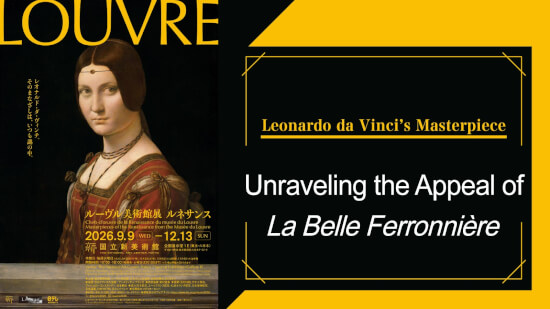


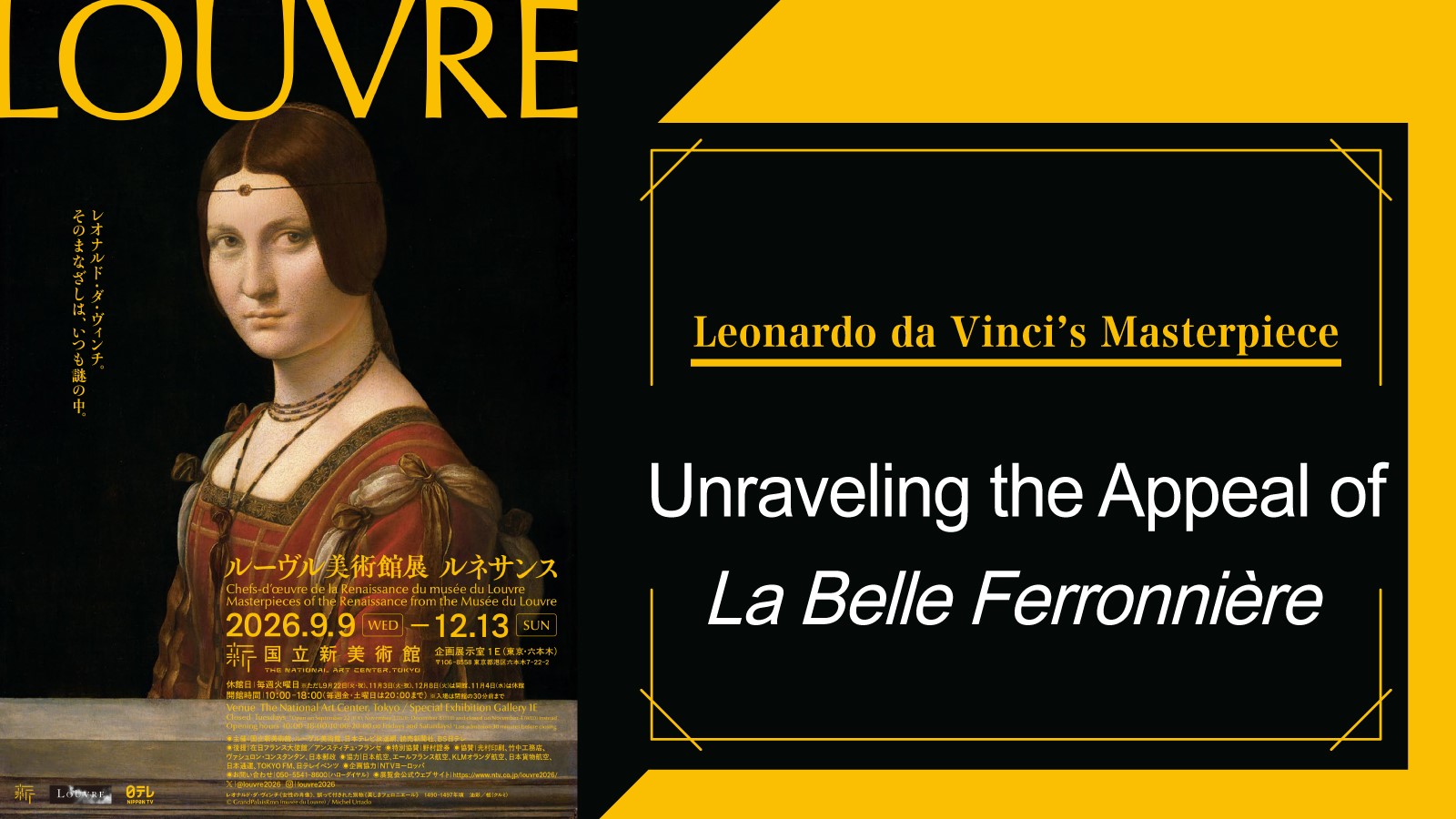
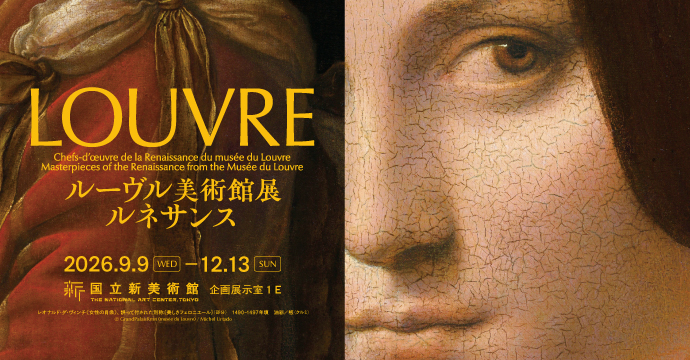
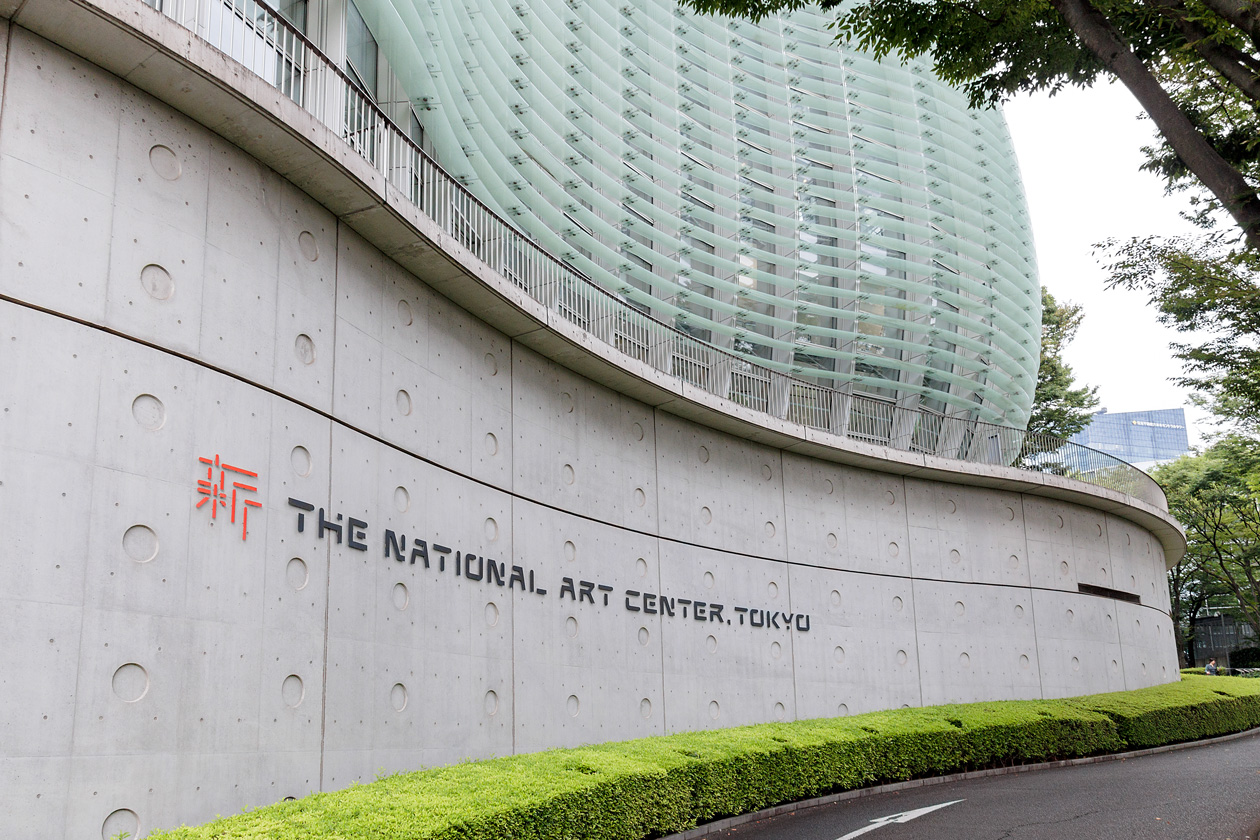
The “Masterpieces of the Renaissance from the Musée du Louvre” exhibition opened on September 9 at The National Art Center, Tokyo. It features more than 50 carefully selected works of Renaissance art from the Louvre’s renowned collection, including Leonardo da Vinci’s La Belle Ferronnière. Organized by Nippon Television, Louvre Museum exhibitions have been held every few years since 2005. Nomura Securities has been a special sponsor since 2015, making this the fourth time the company has supported the exhibition.
This exhibition focuses on the Renaissance, a period from the 14th to the 16th century when art and culture flourished. What are the defining characteristics of Renaissance art? And what is the story behind Leonardo da Vinci’s La Belle Ferronnière?
We spoke with Ayako Miyajima, Senior Curator at The National Art Center, Tokyo. She has worked on Louvre Museum exhibitions for many years and served as the Japanese curator for this exhibition. She shares how to appreciate Renaissance art and what makes the featured works special.
Q. This is the fourth Louvre Museum exhibition you have worked on. Why was the Renaissance chosen as the theme this time?
There had been discussions for some time about holding an exhibition focused on Renaissance art, and we were able to make the idea a reality this time.
The Renaissance may seem distant to us in Japan, but it was a time when the foundations of what we call “art” were established. Techniques that are still used today, such as oil painting and engraving, were developed during this period. The idea of viewing the people who created paintings and sculptures as “artists” also began during the Renaissance.
Later European art developed largely by building on the practices and theories of the Renaissance. Learning about Renaissance art naturally deepens our understanding of Western art that followed. That is why I feel that it is especially meaningful to introduce the characteristics of Renaissance art through works from the Louvre’s collection.
Q. Why is the Renaissance considered the foundation of later art?
The Renaissance generally refers to the period from the 14th to the 16th century. Before that, during the Middle Ages, painters and sculptors had relatively low social status. One reason was that painting and sculpture were not included in the seven “liberal arts,” a system of academic subjects that originated in ancient Greece. Making paintings and sculptures was seen as skilled manual labor, not an intellectual endeavor.
During the Renaissance, however, theorists began to argue that painting and sculpture, like poetry—one of the liberal arts—required intellectual ability. They also said that artists should depict myths and historical stories told by ancient Greek and Roman poets. As a result, Renaissance artists were expected to know ancient literature well and use ancient art as a model.
In the latter half of the 16th century, art academies were first established in Florence, Italy, to provide systematic education for painters and sculptors. From the 17th century onward, this movement spread to other countries. The academies aimed to present painters and sculptors as intellectual professionals who had systematically mastered both theory and practice, rather than as craftspeople trained in workshops.
As a result, the social status of painters and sculptors gradually improved, and the idea of viewing them as “artists” emerged.
From the 17th century onward, Western art continued to develop largely by building on the ideas about art and educational systems established during the Renaissance.

- 拡大
- Ayako Miyajima
Senior Curator, The National Art Center, Tokyo
Q. How did you plan this exhibition?
The works on display were selected under the leadership of Sébastien Allard, Head of the Paintings Department at the Louvre Museum and the exhibition’s general supervisor, and curator Oriane Lavit, who also served as a supervisor.
It is not possible to cover the full 300-year history of Renaissance art in a single exhibition, so we decided to focus on several key aspects. We selected a theme for each section and chose works to match.
The exhibition has four sections. The first focuses on travel, one of the factors that helped Renaissance culture develop. The second explores the various techniques established during the Renaissance. The third presents works that show how Renaissance artists studied and interpreted ancient art. The final section focuses on portraiture, a genre that flourished during the Renaissance. It includes portraits by artists from across Europe, including Leonardo da Vinci’s La Belle Ferronnière.
Q. Could you tell us about the exhibition’s centerpiece, Leonardo da Vinci’s La Belle Ferronnière? What do you find most compelling about it?
The painting is believed to have been created in the 1490s, when Leonardo da Vinci—often referred to simply as Leonardo—was serving Ludovico Sforza, Duke of Milan. The model is thought to have been Lucrezia Crivelli, a woman who was the duke’s favorite.* The painting is slightly smaller than life-size, which may have been the perfect size for Ludovico to view privately at close range, if he commissioned it.
*Favorite: A mistress or concubine who was especially loved by a lord or husband.
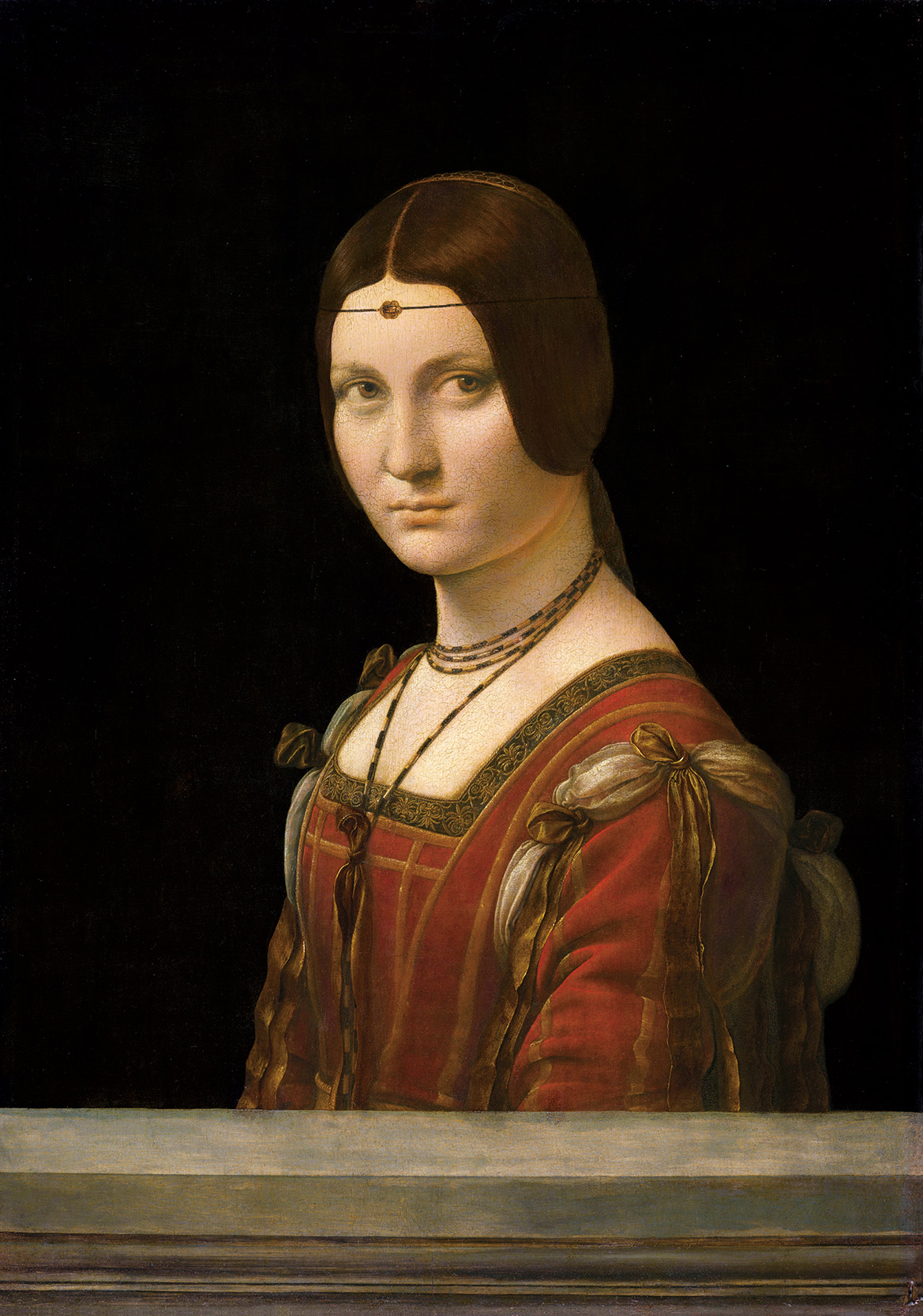
Leonardo da Vinci
Portrait of a Woman, incorrectly known as La Belle Ferronnière
Circa 1490-1497
© GrandPalaisRmn (musée du Louvre) / Michel Urtado
Q. Since photography did not exist at the time, perhaps he wanted to keep looking at her. From this perspective, the woman’s mysterious, somewhat serious expression seems to suggest a story known only to the two of them.
That may be true. At that time, Italian painting theory said that artists should convey a person’s inner emotions through their gestures and facial expression. All artists gradually became aware of this idea, but Leonardo seems to have worked especially hard to achieve it.
At first glance, La Belle Ferronnière seems to show a woman looking straight at us. Her intense gaze is striking. But the longer we look, the more it seems that she may not actually be looking at us. Her mouth looks as if she is smiling, but perhaps she is not. It is difficult to say exactly how she feels.
I think Leonardo was trying to capture the subtle workings of the human mind—feelings that are constantly changing and may sometimes include conflicting emotions.
His famous Mona Lisa is also known for its elusive expression, often described as a “mysterious smile.” Leonardo is said to have kept the painting with him and continued working on it until shortly before his death. This was highly unusual for an artist of his time.
Unlike today, Renaissance art was mainly enjoyed by educated people in the upper classes, including royalty, nobles, clergy, and wealthy citizens. Artists usually worked on commissions from these patrons, who decided the subject of the paintings and set deadlines.
The Mona Lisa was presumably no exception. Leonardo should have given it to the person who commissioned it by the agreed deadline, but for some reason he kept it and continued working on it. Perhaps the patron became tired of waiting and gave up. Leonardo was famous for taking a long time to complete his works, and many of his paintings remain unfinished. I think this may have been because he was rarely satisfied with his own work.

Q. The commissioner must thought, “How long are you going to keep working on it?”
Leonardo was an unusual artist for his time. Although artists were expected to fulfill their patrons’ wishes, he was able to work at his own pace and pursue his experimental ideas.
Interestingly, all the Renaissance painters who became famous for their portraiture received commissions from powerful men, such as monarchs and popes. Yet only one male portrait by Leonardo survives: Portrait of a Musician, which depicts an unidentified man.
Even Ludovico, who Leonardo served for approximately 17 years, does not appear to have commissioned a portrait from him. Perhaps powerful men at the time realized that if they commissioned Leonardo to paint their portraits, they might have to wait a long time—and he might not portray them as they expected.
Q. Leonardo was a genius who could depict people as if he could see into the depths of their souls. Powerful patrons may have wondered whether to commission him, knowing that he might reveal sides of them that they did not want others to see.
La Belle Ferronnière contains another innovative feature for a portrait of its time: it makes the women look as if she is moving.
In portraits of this period, the body and face usually faced the same direction. In this painting, however, the woman’s body and face turn slightly in different directions. This creates a sense of movement.
This subtle adjustment gives the impression that the woman has just appeared before us and is beginning to turn her face toward us. By changing the direction of the face and body slightly, Leonardo gave movement to a figure in a still painting and created a portrait full of life. This was a remarkable achievement—one that only Leonardo could have accomplished at the time.

Q. Is there anything in particular you would like visitors to learn from this exhibition?
As with any exhibition, I hope visitors will value the experience of seeing the original works with their own eyes. There are many things that cannot be understood through photographs or videos alone, such as size and texture of the works. This is true whether or not visitors have prior knowledge of art.
Because of my work, I often think about the people who created these works. Hundreds of years ago, they lived as we do, planned their compositions, and applied the paint. Their works were carefully preserved and passed down through countless people, giving us the opportunity to see them today.
When I think about it this way, seeing the works in person feels almost like a miracle.
All the works in this exhibition can also be seen at the Louvre Museum. However, the Louvre organizes its collection by period and region, so these works are spread throughout the museum.
In this exhibition, various works connected by common themes have been brought together, allowing visitors to compare them. For example, the area featuring La Belle Ferronnière includes paintings and sculptures related to it in several ways.
This unique selection of works will not be repeated. I hope many people will come to see the exhibition. I would also be delighted if seeing Renaissance art inspires visitors to visit other museums or to take a deeper interest in art.
Q. If you had to name one more highlight of the exhibition, what would it be?
It is difficult to name just one, but I would like to highlight the woodcuts and engravings.
Woodcuts became popular after movable-type printing was invented in the mid-15th century, leading to more woodcut illustrations in books. Engraving also developed during the Renaissance, around the same time.
Many copies could be made from a single printing plate, so prints could spread more widely than paintings and sculptures, which usually existed as only one original work. In this way, printmaking during the Renaissance may have played a similar role to that of social media today by helping information reach many people.
Q. Will visitors also be able to see prints that are representative of the Renaissance?
Yes. Visitors can see The Rhinoceros, a woodcut by Albrecht Dürer, one of Germany’s greatest Renaissance artists.
Dürer’s woodcut technique was highly sophisticated, and many artists copied his style.
The print is fairly small—about 24 by 30 centimeters—but its details, including the pattern of the rhinoceros’ skin, are extremely precise.
In fact, Dürer had never seen a rhinoceros. In 1515, a rhinoceros was sent from India to the King of Portugal. Dürer created the print using written descriptions and sketches by other people, filling the details with his imagination.
The print became so popular that it was printed seven more times after Dürer’s death. Illustrations based on Dürer’s rhinoceros also appeared in natural history books throughout Europe. These books later reached Japan through Dejima in Nagasaki, influencing Japanese artists who created their own versions.
It truly was like social media.
At the time, prints were considered inferior to paintings and sculptures. Dürer helped establish printmaking as an independent artform. He is an essential artist for understanding Renaissance printmaking.
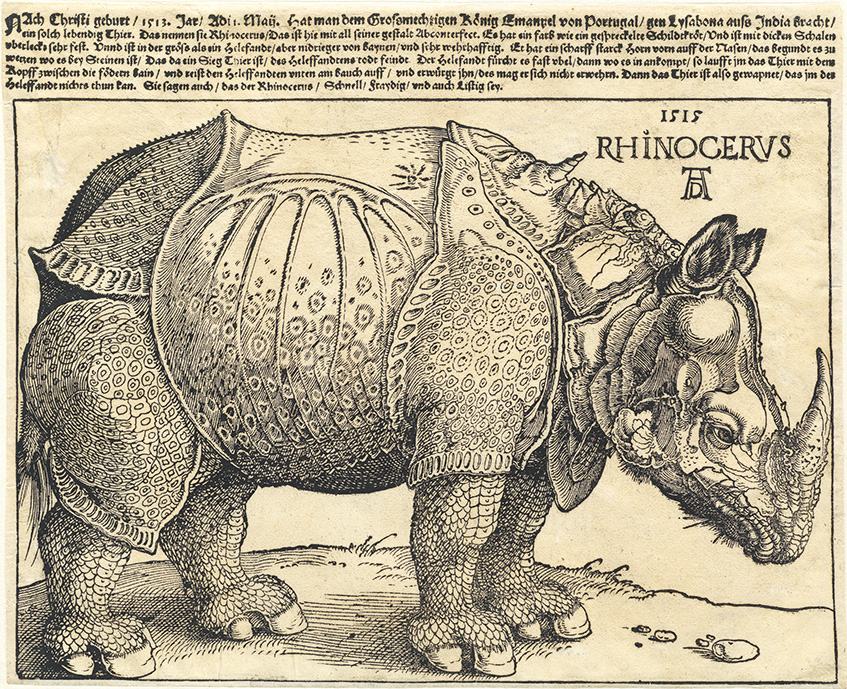
Albrecht Dürer
The Rhinoceros
First edition of 1515
Photo © GrandPalaisRmn (musée du Louvre) / Michel Urtado / distributed by AMF-DNPartcom
Q. You mentioned that engraving emerged during the Renaissance. Are engravings also included in the exhibition?
Yes. Several engravings are on display. One is The Judgment of Paris by Marcantonio Raimondi, an important Italian printmaker.
This engraving was based on a drawing by Raphael, a great master of the Italian Renaissance. Raphael mainly entrusted Raimondi with turning his drawings into prints. Through Raimondi’s excellent engravings, Raphael was able to spread his own compositions and images throughout Europe.
Raimondi, meanwhile, further strengthened his reputation as a printmaker that was trusted by the celebrated artist Raphael. In this way, the two formed a mutually beneficial partnership.
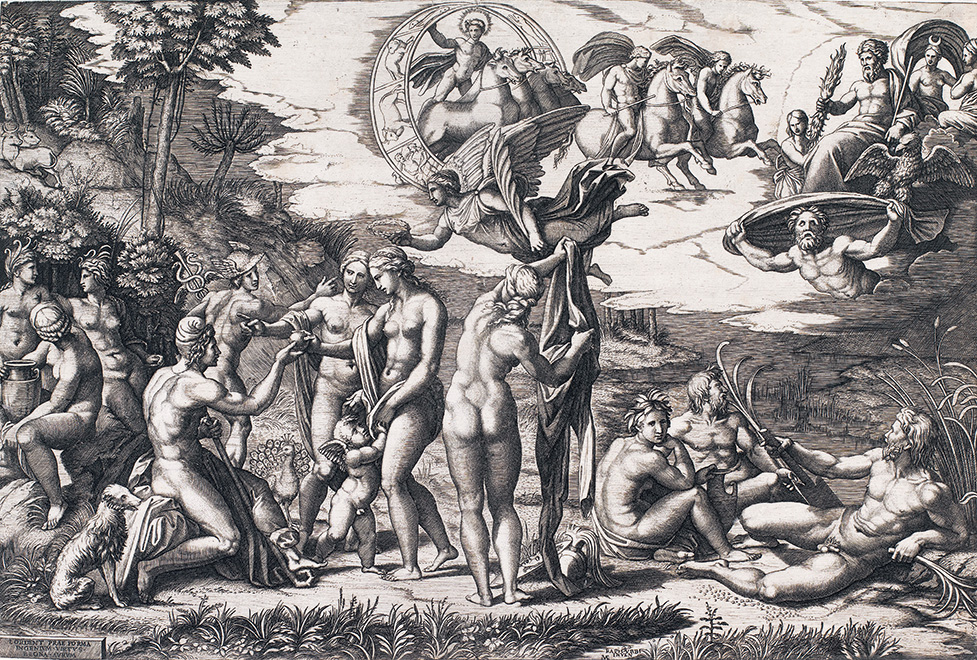
Marcantonio Raimondi, after Raffaello Sanzio, known as Raphael
The Judgment of Paris
Circa 1513-1518
Photo © Musée du Louvre, Dist. GrandPalaisRmn / Angèle Dequier / distributed by AMF-DNPartcom
Q. What was the original drawing by Raphael like?
Raphael’s original drawing for The Judgment of Paris Raphael’s original drawing has been lost. Raimondi’s engraving is therefore the only work that preserves Raphael’s idea for the composition. It influenced artists throughout Europe not only during the Renaissance but for centuries afterward.
Printmaking was a medium that could spread artists’ ideas across great distances and through time. It can therefore be considered as one of the major inventions of the Renaissance.
I hope visitors will discover the appeal of printmaking through this exhibition.

Ayako Miyajima
Senior Curator, The National Art Center, Tokyo
Miyajima graduated from the Department of Art Studies in the Faculty of Letters at Meiji Gakuin University. She completed the required coursework for the doctoral program at the Graduate School of Letters at Waseda University. She joined the Preparatory Office for The National Art Center, Tokyo, in April 2003 and began working at the museum in January 2007.
She specializes in Western art, particularly 17th-century French art, and has served as a curator or co-curator for numerous exhibitions in this field. Her recent major exhibitions include “Painting Love in the Louvre Collections” (2023), “Kashiwa Sato” (2021), “Japan-Hungary Friendship 150th Anniversary—Treasures from Budapest—European and Hungarian Masterpieces from the Museum of Fine Arts Budapest and the Hungarian National Gallery” (2019), and “The Art of Portraiture in the Louvre Collections” (2018).
Exhibition: Masterpieces of the Renaissance from the Musée du Louvre
Dates: Wednesday, September 9, 2026 - Sunday, December 13, 2026
Closed: Tuesdays
Open on September 22 (Tuesday, national holiday), November 3 (Tuesday, national holiday), and December 8 (Tuesday, national holiday). Closed on November 4 (Wednesday).
Hours: 10:00 a.m.–6:00 p.m.
Open until 8:00 p.m. every Friday and Saturday.
Last admission is 30 minutes before closing.
Venue: The National Art Center, Tokyo, Exhibition Hall 1E
7-22-2 Roppongi, Minato-ku, Tokyo 106-8558
Special Sponsor: Nomura Securities
Official Website:
“Masterpieces of the Renaissance from the Musée du Louvre” | Nippon Television