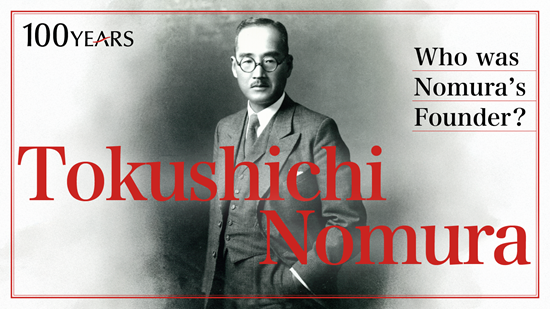


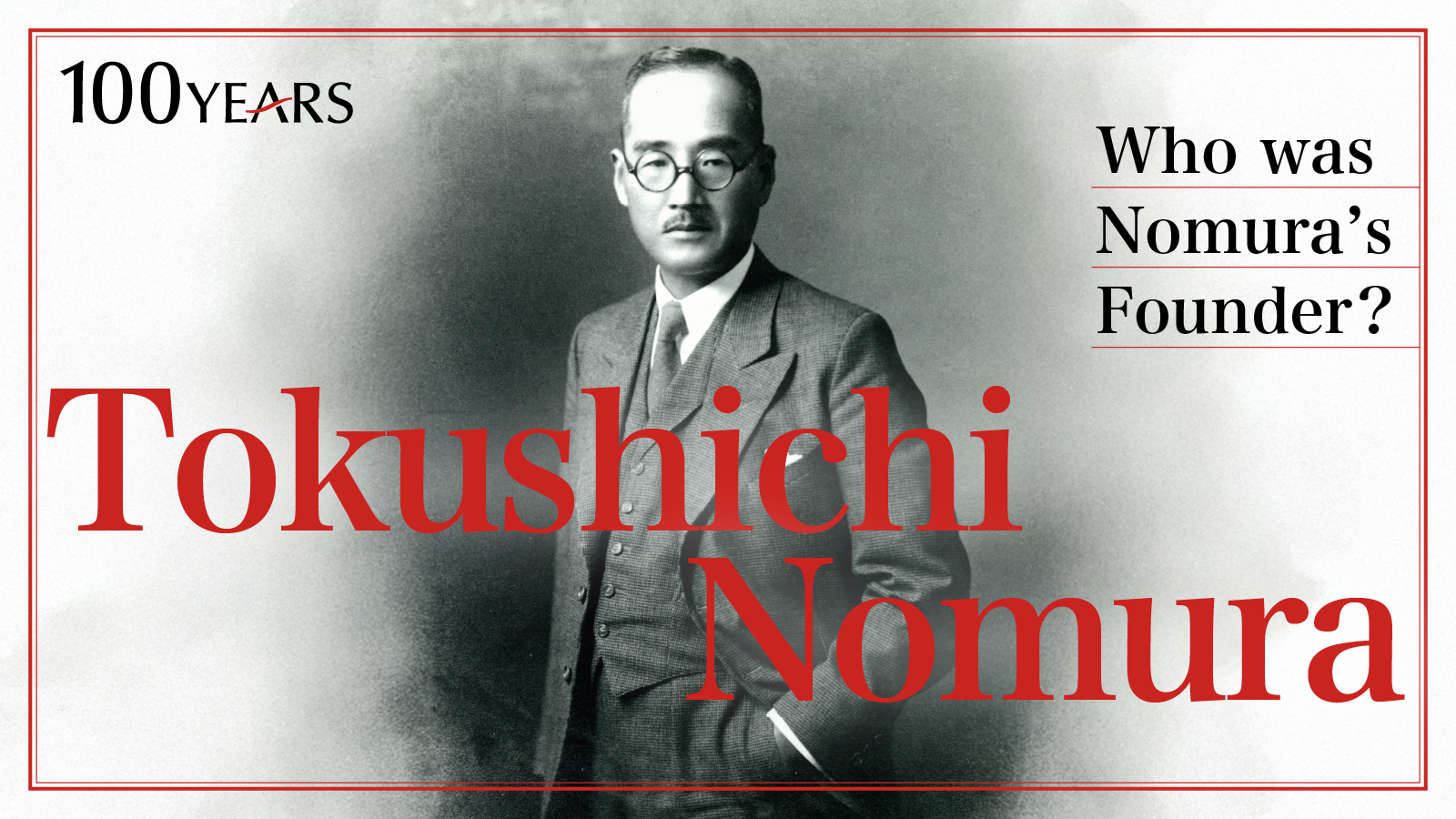
What ambitions drove Tokushichi Nomura who built the Nomura Zaibatsu in a single generation? From a boyhood spent pulling a heavy wooden cart that likely weighed dozens of kilograms to an apprenticeship marked by more failures than successes, he ultimately entered the world of finance. This article traces his journey and character, shaped by a steadfast desire to do what benefits customers and serves society.
Tokushichi Nomura, born Shinnosuke Nomura on August 7, 1878, was the eldest son of an Osaka moneychanger. A rambunctious boy, he had to change elementary schools twice due to his unruly behavior. He and his younger brother Jitsusaburo often assisted with the family business, pushing carts laden with coins through the streets of Osaka. His father, Tokushichi Nomura I, was methodical and honest, with a good eye for money and a reputation for being trustworthy. His mother came from a samurai family and would scold Shinnosuke sharply whenever he lost a fight: “If you’re going to cry every time you lose, you might as well just commit hara-kiri and get it over with.”
At 18, Shinnosuke was apprenticed to Yashiro Shoten, a stock trading enterprise owned by his brother-in-law. He quickly became captivated by the stock market and invested company funds in trading, suffering heavy losses. Unable to give up his passion for stocks, he persuaded his father to allow him to be a stockbroker. Dressed in a Western suit and riding a bicycle, he set out to win clients. However, he continued to face setbacks and the path to becoming an entrepreneur remained long and uncertain.
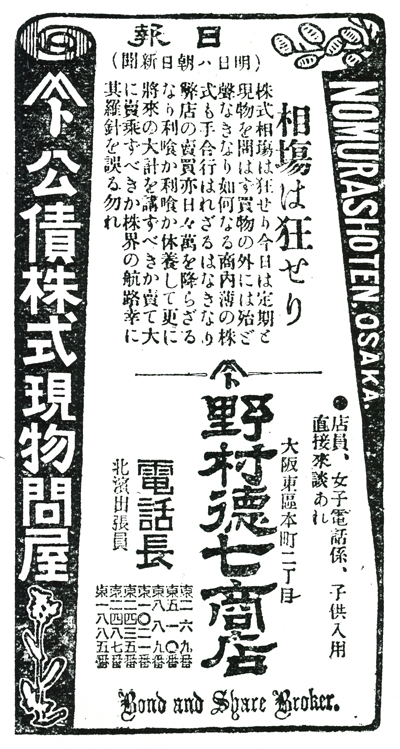
The turning point came in 1904 when 26 year old Shinnosuke took over management of Nomura Tokushichi Shoten. Three years later, he adopted his father’s name and became Tokushichi Nomura II. Having learned from repeated failures the dangers of operating on instinct, he established a research department and began publishing its findings in newspaper advertisements and pamphlets. He thoroughly analyzed data from the Sino-Japanese war, identified the Russo-Japanese war as a major opportunity, and driven by rigorous research and conviction, predicted a sharp market reversal. He even ran an opinion advertisement warning that “the market is unhinged.” This decisive strategy dramatically expanded the company’s asset base and laid the foundation for Nomura future growth.
- 拡大
- Opinion advertisement from January 8, 1907
- 拡大
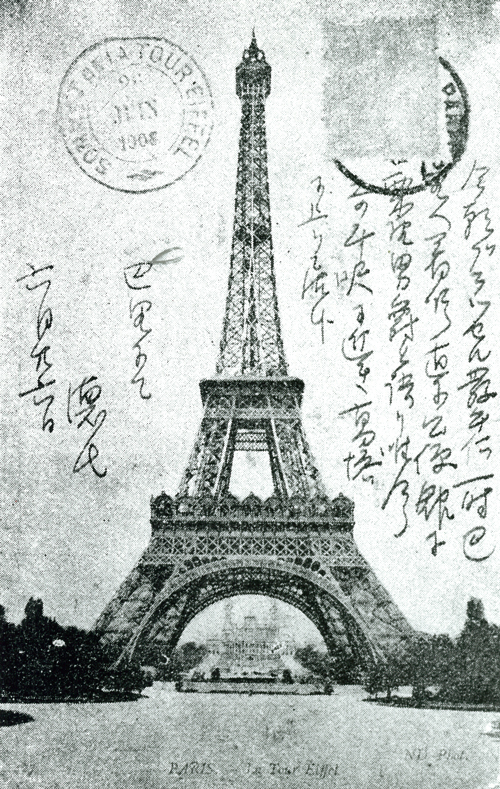
- Tokushichi sent many postcards home during his travels
In 1908, shortly after turning 30, Tokushichi embarked on a five-month tour of the United States and Europe. Particularly impressed with New York’s Wall Street and London’s Lombard Street, he returned to Japan determined to become the country’s leading financier. He grew the business by recruiting and training talented university graduates and launching overseas bond trading. A two-month tour of Southeast Asia in 1916 led to the establishment of the Nomura South Sea Enterprise Division. Later acquisitions, including a coffee farm in Brazil, showed his growing focus on southern markets as he built an enterprise group spanning securities, banking and trading.
As his business grew, Tokushichi deepened his commitment to society. In 1920, he pledged ¥500,000 to establish the Nomura Scholarship Fund, and in 1927 he donated ¥1 million to set up an economic research institute in Osaka. The following year he was appointed to the House of Peers and actively contributed to economic and fiscal policymaking in Japan. Tokushichi also upheld strict corporate ethics. In 1926, he demanded the dismissal of longtime colleagues for irregular dealings.
Tokushichi had a unique philosophy about trading. In 1937, when Nomura Securities began dealing in stocks, he warned employees against profiting from short selling, saying it “comes from a narrow, self-serving mindset in which one person benefits while others suffer” and is morally wrong. “People, like plants, always turn toward the light. When hope is lost, human energy is lost. Always be ready to buy.” Tokushichi did not merely play the market, he always kept sight of the kind of society he wanted to build.
- 拡大
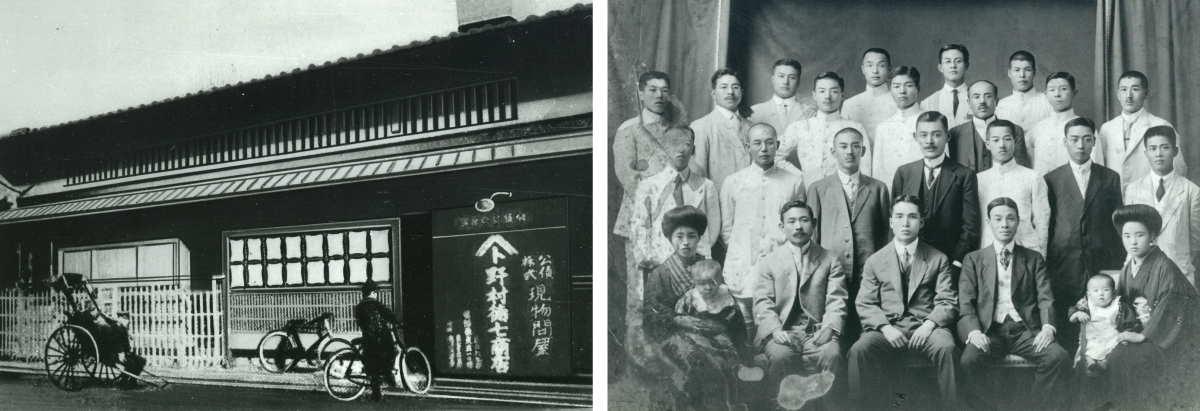
- Image (left): Nomura Tokushichi Shoten shop in Osaka
Image (right): Staff of Nomura Tokushichi Shoten
From the time he founded Nomura Group in his 30s until his death at 67, Tokushichi Nomura devoted himself to preserving Japanese culture.
Encouraged by his wife, he began studying tea ceremony at 34. He quickly became captivated by the profound intricacies of the practice and was given the tea name “Tokuan”. With single-minded passion, he soon became a dedicated practitioner and formed close ties with other connoisseurs. His pursuit of hospitality culminated in the construction of his Kyoto villa, Hekiunso, in the Nanzenji area. The grounds include nine tea houses, one of which was arranged with chairs for foreign guests, showing his early commitment to welcoming visitors from around the world.
Tokushichi wrote of the tea ceremony: “The four characters, wa, kei, sei, jaku (harmony, respect, purity and tranquility), are the essence of the tea ceremony. Tea is more than manners, more than morals, more than knowledge, more than art – it encompasses all of these and is a uniquely Japanese discipline with great aesthetic value.”
While navigating the fast-paced world of finance, Tokushichi continually reflected on his role as an entrepreneur, as a Japanese citizen, and as a human being. He embraced the etiquette, morals, and spirit of hospitality central to Japanese culture.
- 拡大
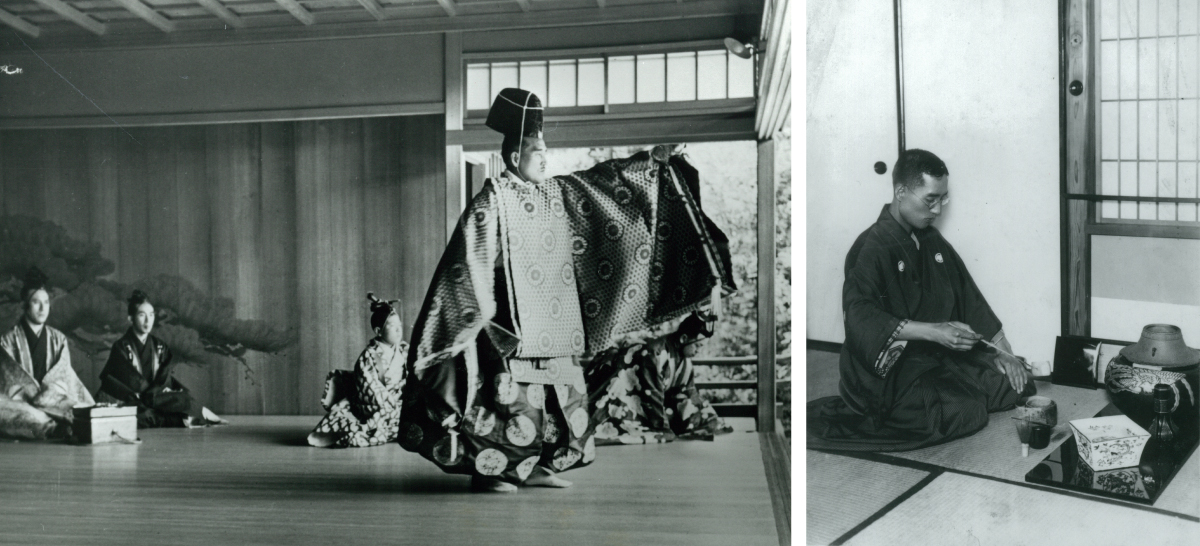
- Image (left): Tokushichi performing Noh
Image (right): Practicing the tea ceremony
Tokushichi was also passionate about Noh theater. Hekiunso had an impressive Noh stage, and in his later years he dedicated most of his leisure time to Noh. It is said that tea ceremony, Noh and business shaped Tokushichi’s character— for him his hobbies and work were inseparable. He took up Noh at around 36, about two years after he started practicing tea ceremony. On stage, he was said to project a dignified presence and was able to recite even the most difficult vocal passages that professionals often struggled with.
Although he pursued a samurai-like boldness in everything he did, the more deeply he immersed himself in the arts, the more he recognized his own limitations and adopted a humble, scholarly attitude. Having mastered both the tea ceremony and Noh theater amid his busy life, Tokushichi lived with constant attention to detail, passing away on January 15, 1945.
Nomura Shokusan Advisor, Harukata Nomura
My grandfather an indomitable spirit that would not let him admit defeat. He was strict, and I used to be frightened of him. He rose early every day, and on New Year’s morning, the traditional family greeting took place at 4 a.m. Above all, he was constantly busy. My grandmother says that when he was in his 30s, he never sat down to eat his midday meal. He hated losing—whether at mahjong or anything else—and according to a household attendant he would play without sleeping until he won.
He had many hobbies and pursued each with enthusiasm. In addition to tea ceremony and Noh, he studied Chinese classics, English, and Noh librettos. He studied painting under a famous artist and was awarded the pen name “Shuho”. He built a kiln for firing pottery and created a Noh stage and tearooms at his villa. He was particularly fond of the tea ceremony—my grandmother recommended it as a way to calm his restlessness.